What Is Al Sa’fat Dubai?
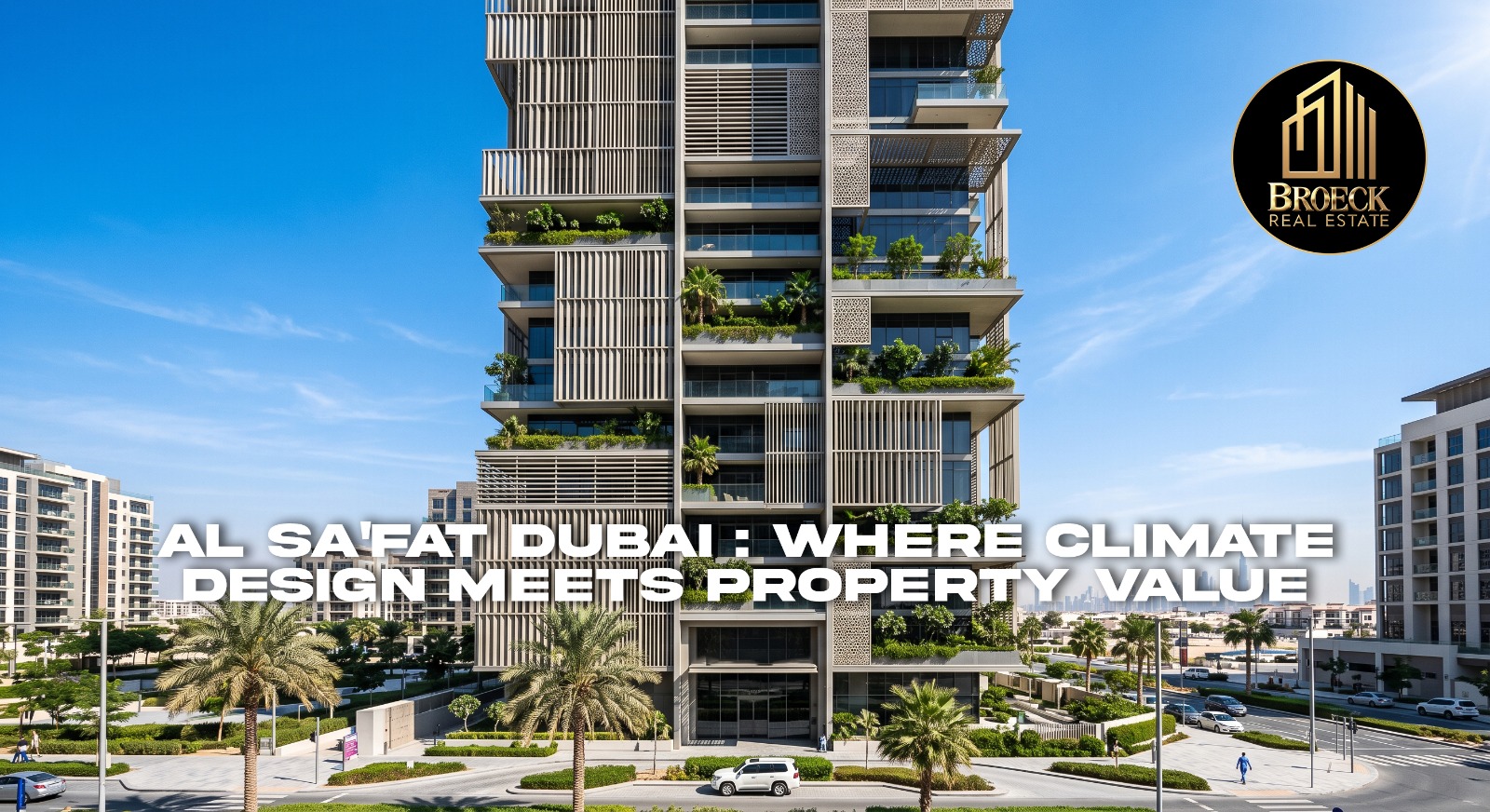
Al Sa’fat is Dubai Municipality’s official green building rating system, introduced in 2014 and refined in later editions to tighten performance requirements. It rates every new building — residential, commercial, industrial, and mixed-use — across four tiers: Bronze, Silver, Gold, and Platinum, based on energy efficiency, water conservation, materials and waste management, and indoor environmental quality. Silver is the mandatory minimum for any new building permit today, which is why the system now shows up in something as everyday as a shading louver design or a monthly utility bill.
Al Sa’fat Dubai the emirate’s official green building rating system — sits behind a bigger story. Dubai doesn’t have flood zones or hurricane maps the way many markets do; its defining climate factor is heat. Summer temperatures regularly pass 45°C, and that single fact has quietly reshaped how buildings are designed, rated, and valued across the emirate.
Al Sa’fat Dubai Green Building Regulations: A Decade in the Making
Dubai Municipality’s green building regulations became mandatory for all new buildings back in 2014, and the Al Sa’fat green building rating system now governs energy efficiency, insulation, water conservation, and indoor environmental quality across residential, commercial, and mixed-use developments. These Dubai green building regulations aren’t a niche “eco” certification they’re baseline compliance for anything built today.
What This Means for Dubai Property Buyers Right Now
DEWA Cooling Costs Dubai: A Real Line Item DEWA cooling costs in Dubai vary significantly between older, poorly insulated buildings and newer Al Sa’fat-compliant ones ask for average utility costs before you buy, not just the service charge.
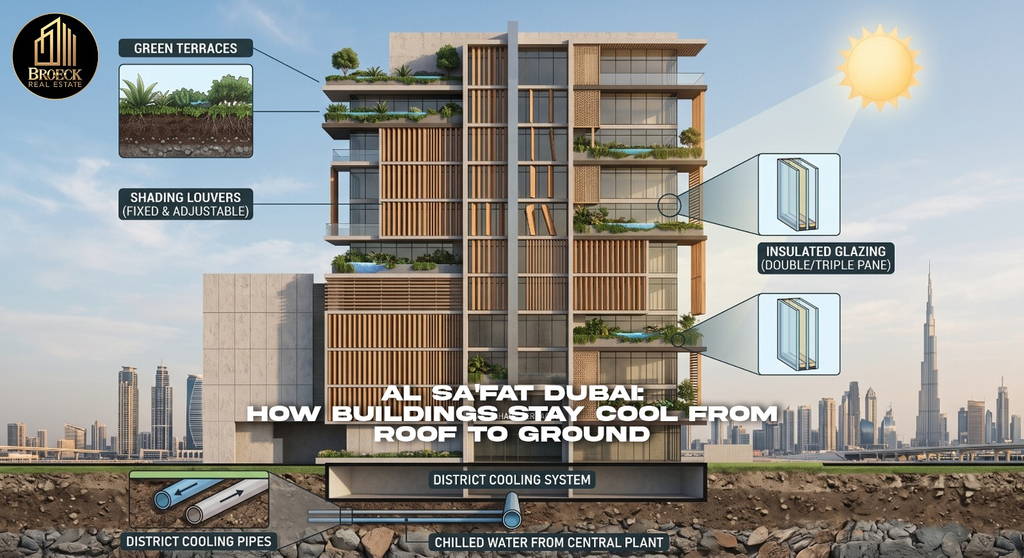
Building Orientation and Shading Matter Units with good passive shading and efficient HVAC design hold their value better and are cheaper to live in.
District Cooling Dubai: A Selling Point Communities served by centralized district cooling systems in Dubai tend to offer more predictable, often lower, cooling costs than standalone AC systems.
The Bigger Picture: The Green Premium in Dubai Property
Dubai’s Clean Energy Strategy 2050 and UAE Net Zero commitments mean these standards will only get stricter, not looser. Older buildings that haven’t been retrofitted may face a widening value gap against newer, Al Sa’fat-compliant stock — and that gap is exactly where the green premium in Dubai property shows up: certified buildings increasingly command higher resale and rental value than uncertified stock nearby.
The Takeaway
In a desert climate, “climate-resilient” mostly means “heat-efficient.” A building’s Al Sa’fat Dubai rating and cooling performance are no longer a footnote — they’re part of the real, ongoing cost of ownership, and increasingly part of what buyers are willing to pay a premium for.
Want to know how a specific building’s Al Sa’fat rating and cooling costs compare to similar options nearby? We can pull that together for you.