
Dubai’s property market has spent the last few years living up to its reputation for scale and speed and 2026 is no exception. If you’ve been searching “Dubai real estate” or “Dubai properties” trying to make sense of where the market stands right now, this guide breaks it down in plain terms: what’s happening with prices and transactions, which neighbourhoods are worth watching, how to buy as a foreign investor, and what to expect from rental yields
Why Dubai Real Estate Keeps Attracting Global Buyers
Dubai’s appeal to property investors isn’t new, but the reasons behind it have matured. Early on, the pitch was simple: no income tax, no capital gains tax on residential property, and a skyline growing faster than almost anywhere on earth. That pitch still holds, but today it’s backed by more substance a diversifying economy, a fast-growing resident population, and government policies specifically designed to make long-term ownership attractive to foreigners.
The Golden Visa program is a good example. By offering long-term residency to property investors who meet certain thresholds, Dubai has shifted its buyer base away from short-term speculators and toward people who actually intend to live in, or hold onto, what they buy. That shift matters, because it changes the character of the market fewer flips, more end-users, and a rental sector that behaves more predictably as a result.
Add to that Dubai’s position as a connectivity hub between Europe, Asia, and Africa, its safety record, and a lifestyle offering that spans everything from ultra-luxury waterfront living to affordable family communities, and it’s easy to see why buyers from the UK, India, Russia, China, and increasingly the US keep showing up in transaction data.
The 2026 Market at a Glance
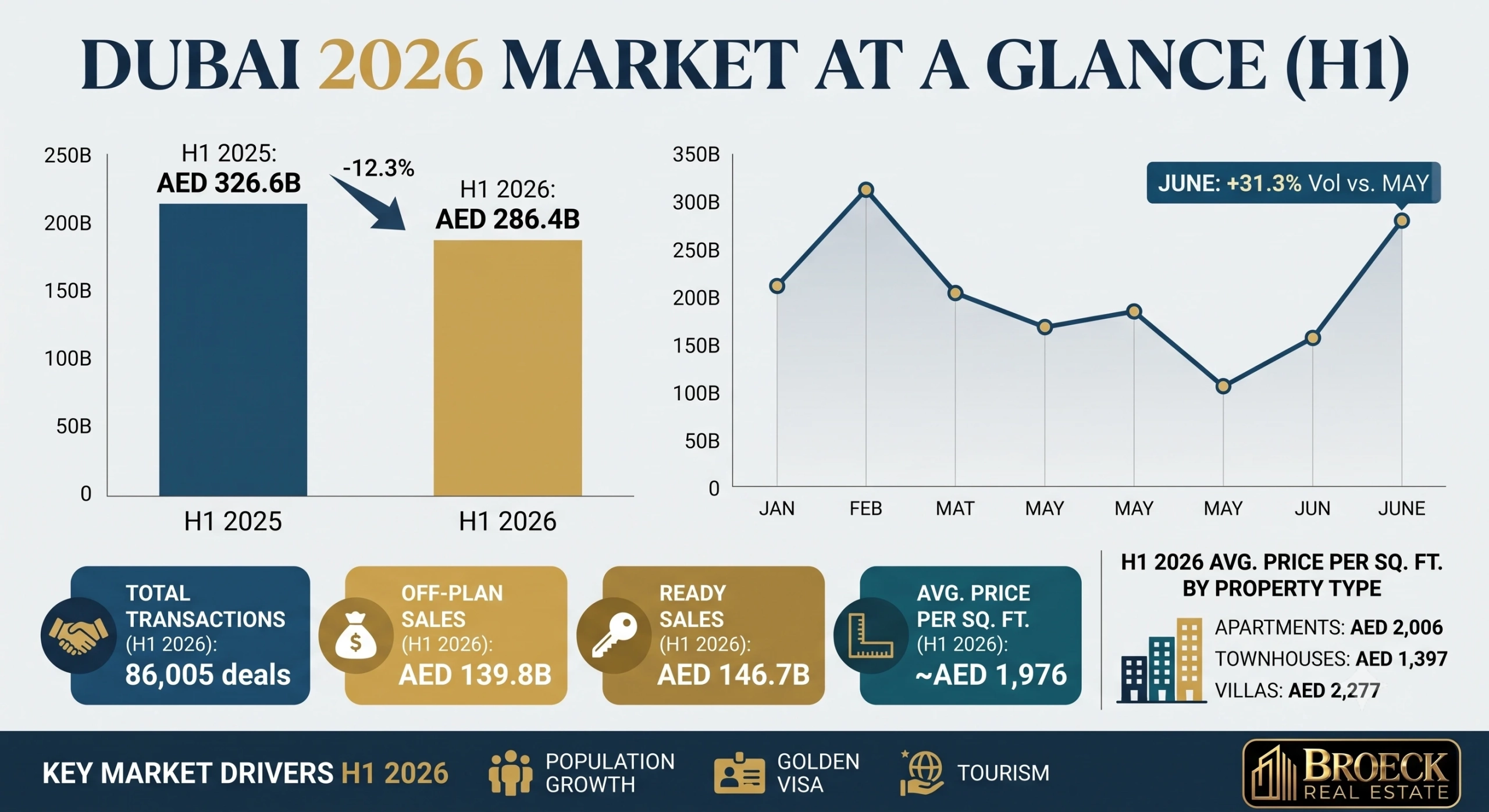
The numbers tell a story of a market that is still large and active, but no longer in the frenzied, price-spiking phase of a couple of years ago. Dubai’s property market generated roughly $78 billion in sales during the first six months of 2026, across more than 79,000 transactions and over 67,000 units sold. January was the standout month, opening the year with the highest transaction value of the half, while activity moderated through spring before high-value deals, particularly in branded residences, picked back up .
That said, not every dataset tells exactly the same story, which is itself informative One mid-year review recorded 79,281 residential sales worth roughly AED 221.4 billion in H1 2026, compared with close to 92,000 transactions worth AED 262.6 billion in H1 2025 a decline of nearly 14% in volume and almost 16% in value year-on-year . Read alongside the record-breaking headline figures, the picture that emerges is a market correcting from an exceptional 2025 into something more sustainable, rather than one that’s cooling in any worrying sense.
On pricing, forecasts lean toward measured, not explosive, growth. Citywide residential capital values are projected to rise around 10% in 2026, with villas expected to outperform apartments, appreciating closer to 17.7% . Rents are following a similar pattern of divergence rather than a uniform trend. The apartment rental index put average rents at roughly AED 120 per square foot in June 2026, down about 4% year-on-year though that citywide average masks real differences at the neighbourhood level, with some communities posting rent increases where supply stayed tight or new transport links opened . The takeaway for anyone reading the headlines: broad citywide statistics are useful for context, but Dubai in 2026 is a market where location-specific research matters more than it has in years
Where Buyers Are Looking: Dubai’s Key Neighbourhoods
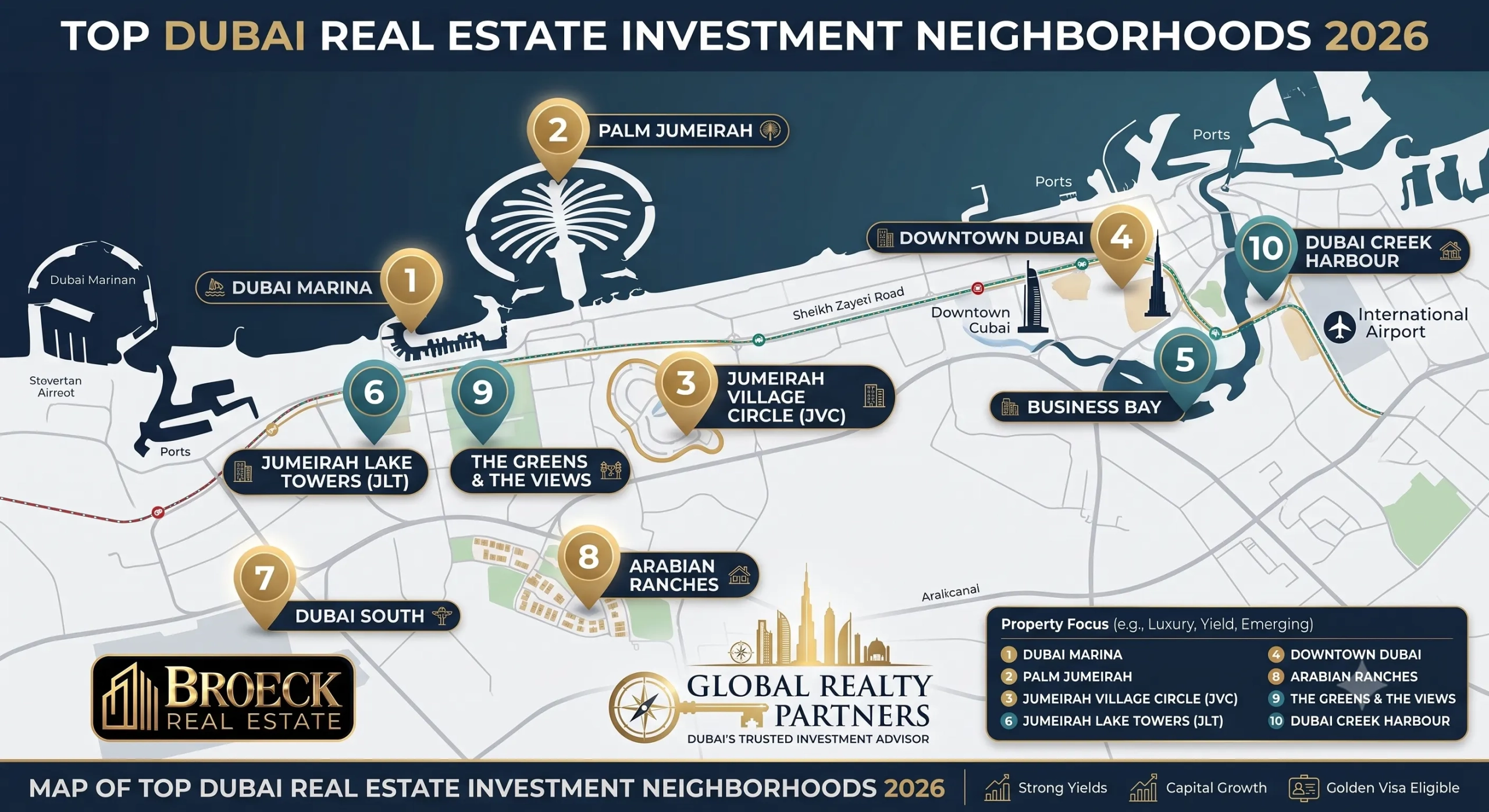
Dubai isn’t one market it’s dozens of micro-markets stitched together, each with its own price point, buyer profile, and rental dynamics. Here’s a rundown of the areas that consistently come up in buyer conversations right now.
Downtown Dubai
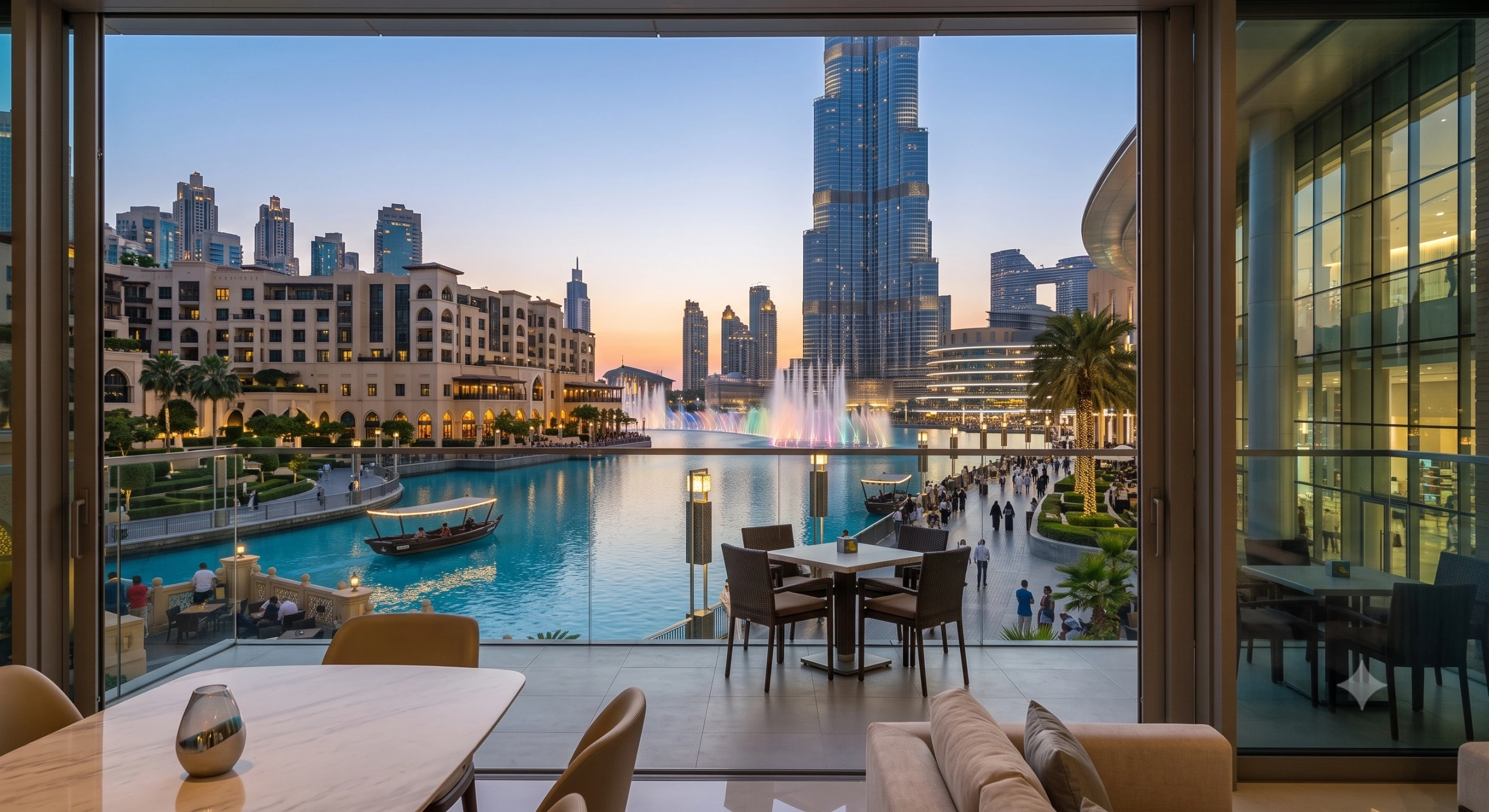
Home to the Burj Khalifa and Dubai Mall, Downtown remains the address most international buyers recognize first. It commands premium pricing, and tenants many working nearby in DIFC are often willing to pay more to avoid a commute rather than relocate to cheaper areas.
Dubai Marina & JBR
A magnet for young professionals and short-term rental investors, thanks to the waterfront lifestyle, walkability, and proximity to the beach. Marina apartments tend to see strong holiday-let demand alongside standard leasing.
Business Bay
Positioned as a more affordable alternative to Downtown while still being centrally located, Business Bay has grown into a genuine residential hub rather than just a business district, with a steady pipeline of new towers.
Dubai Hills Estate
A favourite for families, offering villas and townhouses around a golf course, with schools, parks, and retail built into the master plan. This is one of the communities benefiting from buyers trading city-centre convenience for space.
Arabian Ranches & Town Square
Villa communities aimed squarely at families who want a suburban feel without leaving Dubai. Both have loyal resale and rental markets because supply of family-sized villas in Dubai remains comparatively limited.
Palm Jumeirah
Still the benchmark for ultra-luxury waterfront living, and one of the areas most exposed to the branded-residence and high-net-worth buyer trend that’s been driving some of 2026’s largest single transactions.
Jumeirah Village Circle (JVC)
The go-to for investors chasing higher rental yields at a lower entry price point. JVC has matured significantly, though buyers should factor in that heavier new supply here can mean more pricing competition.
Apartments vs. Villas: Which Is the Better Investment Right Now?
This is one of the most common questions from investors, and 2026 data gives a fairly clear answer, at least directionally. Villas are outperforming apartments on capital appreciation, largely because villa supply has never caught up with demand the way apartment towers have. Families who can afford to buy are increasingly choosing to buy rather than rent, and that’s pushing villa prices in established communities higher.
Apartments, meanwhile, remain the more liquid, more accessible entry point — lower price per unit, higher transaction volumes, and a deeper pool of buyers and renters at resale time. For yield-focused investors rather than capital-appreciation-focused ones, well-located apartments in areas like JVC, Business Bay, or Dubai Marina often still deliver stronger rental returns relative to purchase price than villas do.
The practical framework: if the goal is long-term capital growth and you can hold for years, villas in supply-constrained family communities look attractive. If the goal is rental income and flexibility, apartments in high-demand, well-connected areas remain the more efficient choice.
Off-Plan vs. Ready Properties
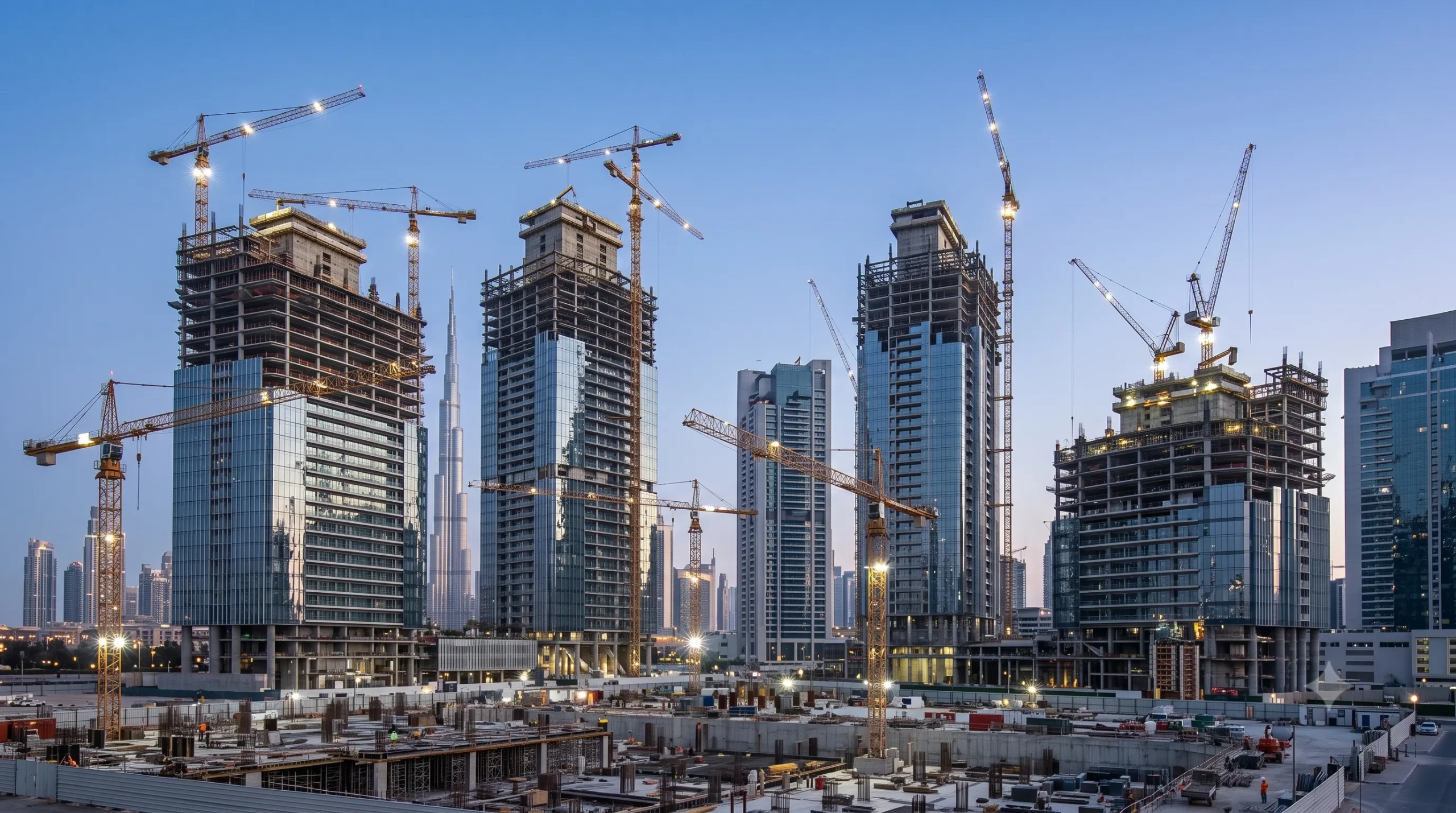
Off-plan property units bought directly from a developer before or during construction continue to dominate new supply in Dubai, and for good reason: lower entry prices, flexible payment plans that can stretch well beyond handover, and the chance to buy into a project before prices are fully priced in.
The trade-offs are real, though. Off-plan buyers are exposed to construction delays, changes in market conditions between purchase and handover, and the general uncertainty of buying something that doesn’t exist yet. Ready properties cost more upfront but come with the obvious advantages of immediate rental income, a track record you can inspect, and no delivery risk. A sensible approach for most buyers is to treat off-plan as the growth allocation of a portfolio and ready properties as the income-generating, lower-risk allocation rather than going all-in on one or the other.
How Foreigners Can Buy Property in Dubai
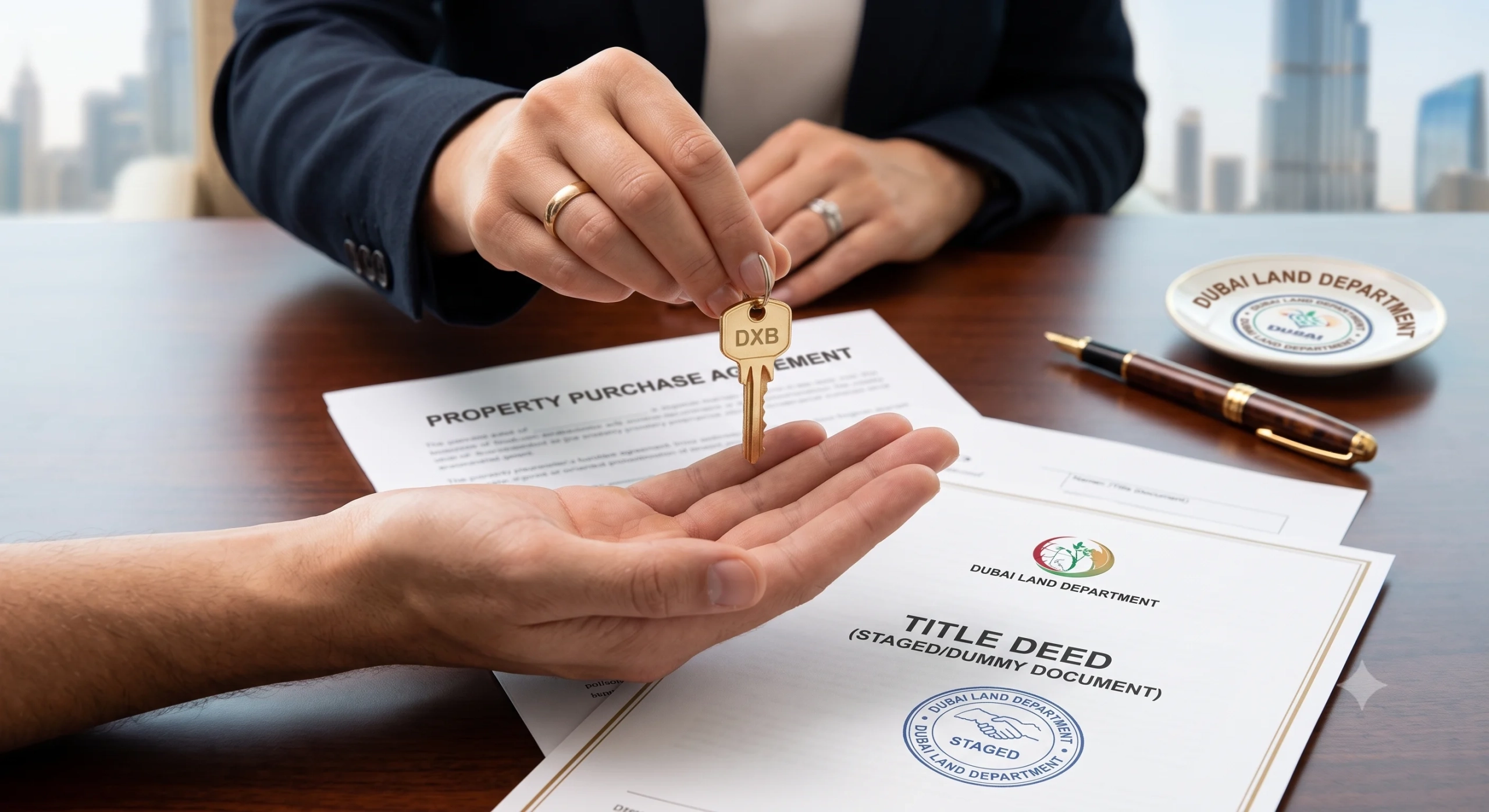
One of Dubai’s biggest draws is how accessible property ownership is to non-residents. In designated freehold areas which now cover most of the neighborhoods buyers actually want, including Downtown, Marina, Business Bay, Palm Jumeirah, and JVC foreign nationals can buy, sell, lease, and pass on property with full ownership rights, no local sponsor required.
The process itself is relatively straightforward compared to many global markets:
- Choose a freehold area and property, working with a RERA-registered agent.
- Sign a Memorandum of Understanding (Form F) with the seller and pay a deposit, typically around 10%.
- Obtain a No Objection Certificate (NOC) from the developer confirming there are no outstanding service charges or dues.
- Transfer ownership at the Dubai Land Department, where the remaining balance is paid and the title deed is issued in the buyer’s name.
Buyers should budget for the Dubai Land Department transfer fee (typically 4% of the purchase price), plus agency commission and any mortgage-related fees if financing is involved. Mortgage financing is available to non-residents through many UAE banks, though loan-to-value ratios and eligibility criteria differ from local buyer terms.
Rental Yields and the Buy-to-Let Case
For income-focused investors, Dubai remains one of the more attractive global cities on a pure yield basis, especially compared to mature markets like London or New York, where gross yields often sit in the 2-4% range. Dubai’s tax-free rental income, combined with yields that in many communities still land in the 6-8% range for apartments, is a big part of why the city keeps pulling in buy-to-let investors rather than just owner-occupiers.
Rental demand is being supported by continued population growth and limited ready inventory in many areas, and tenants are increasingly signing longer leases as family occupancy rises a trend that benefits landlords looking for stability over the churn of short-term tenancies. That said, after years of steep annual rent increases, tenants are pushing back on landlords more than before, or simply relocating to areas where rent feels less punishing, so investors shouldn’t assume automatic year-on-year rent growth everywhere building quality, amenities, and location within a community now matter more to sustaining rents than they used to.
Risks and Realistic Expectations for 2026
No honest guide to Dubai real estate should skip the caveats. A few things worth keeping in mind:
- Supply is heavy in some segments. Off-plan launches have been prolific, and in areas with the most new stock, buyers may face longer resale timelines or softer pricing until that supply is absorbed.
- The market is becoming more selective, not uniformly hot. <cite index=”6-1″>Price changes are expected to be selective rather than citywide, with projects lacking infrastructure or connectivity facing pressure regardless of the overall market</cite> — meaning due diligence on a specific building or community matters more than headline city statistics.
- Regulatory and financing conditions can shift. Mortgage rules, visa thresholds, and developer oversight have all tightened in recent cycles, generally in ways that favor long-term market health but that buyers should confirm are current before committing.
- Currency and global capital flows matter. Because so much demand comes from international buyers, shifts in global interest rates or currency strength can move demand into or out of Dubai relatively quickly.
None of this points to a market in trouble most forecasts describe 2026 as a transition to a steadier, more mature phase rather than a downturn but it’s a reminder that “Dubai real estate” isn’t a single trade. It’s dozens of smaller decisions about location, property type, and holding period.
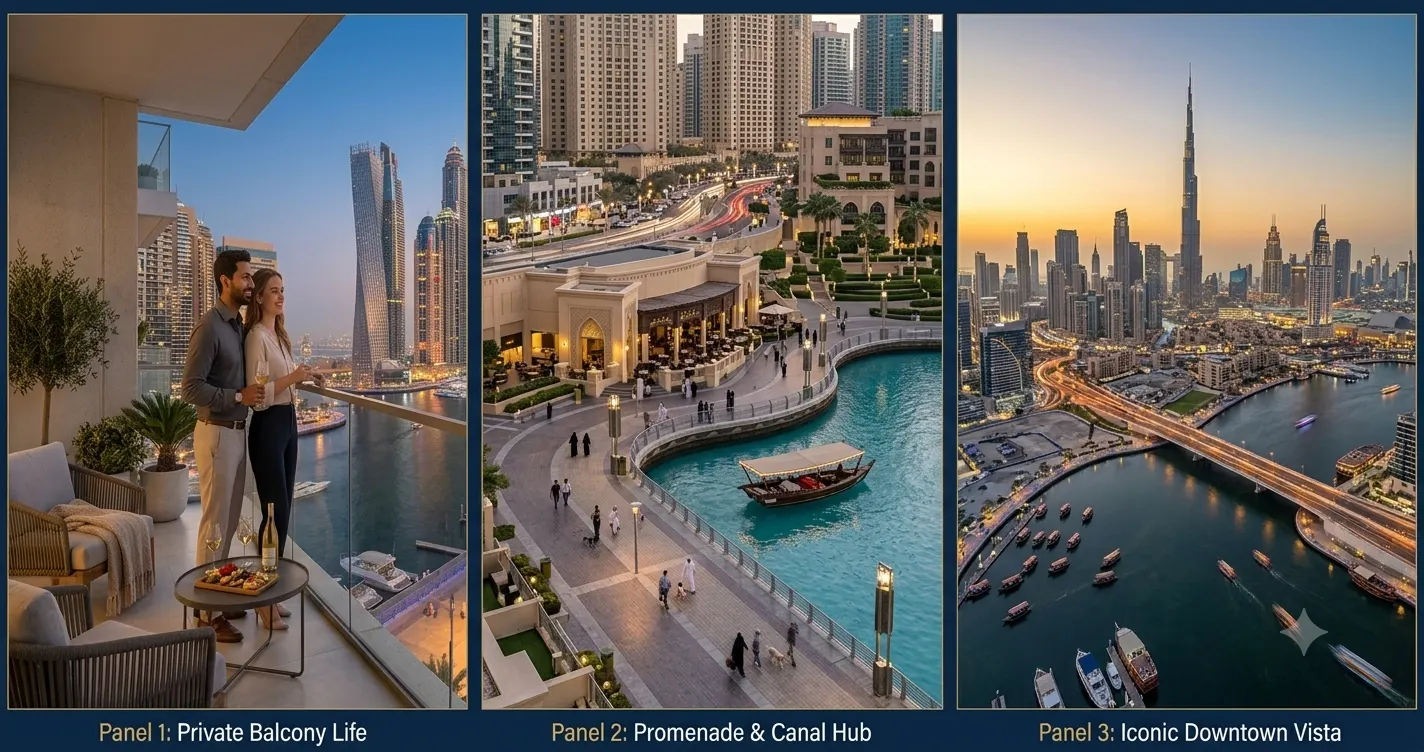
For buyers with a genuine long-term horizon five years or more the fundamentals still look sound: population growth, tax advantages, expanding infrastructure, and a government clearly committed to keeping the market attractive to foreign capital. For opportunistic, short-term flippers hoping to repeat 2022-2024-style gains, 2026’s more measured, segmented market is a harder environment. The practical advice holds regardless of which camp you’re in: don’t buy the city, buy the community. Get comparable sales data for the specific building or street, understand the supply pipeline nearby, and match the property type apartment or villa, off-plan or ready to what you actually want out of the investment, whether that’s yield, capital growth, or a home to live in yourself